How to Read a North Indian Kuṇḍalī
Fixed houses, moving signs, and the logic of the diamond
By Vamsikrishna Sankarayogi ·
The North Indian kundli reverses the visual priority of the South Indian chart. Here the houses stay fixed. The upper central diamond is always House 1; the left central diamond is House 4; the lower central diamond is House 7; the right central diamond is House 10. Zodiac signs are shown by numbers placed inside those fixed house fields.
This makes the chart excellent for house-based questions. A trained reader can see the angular cross, trines and difficult houses immediately. It also creates the most common novice error in Indian chart reading: mistaking a sign number for a house number.
The diamond changes the display, not the calculation beneath it. A reproducible sidereal chart must still state its ayanāṃśa, node convention and house method.
Teaching chart used throughout the series Name: Ananya — a fictional teaching chart, not a real client Birth data: 15 March 1990, 2:30 PM IST; Bengaluru, India Calculation: Swiss Ephemeris 2.10.03; Lahiri (Chitrapaksha) ayanāṃśa (the offset used to define a sidereal zodiac); true node; whole-sign houses Ascendant: Cancer 04°25′41″ Moon: Libra 14°32′04″, Svātī pāda 3 Birth-period balance: approximately 7.38 years of Rahu mahādaśā remained at birth.
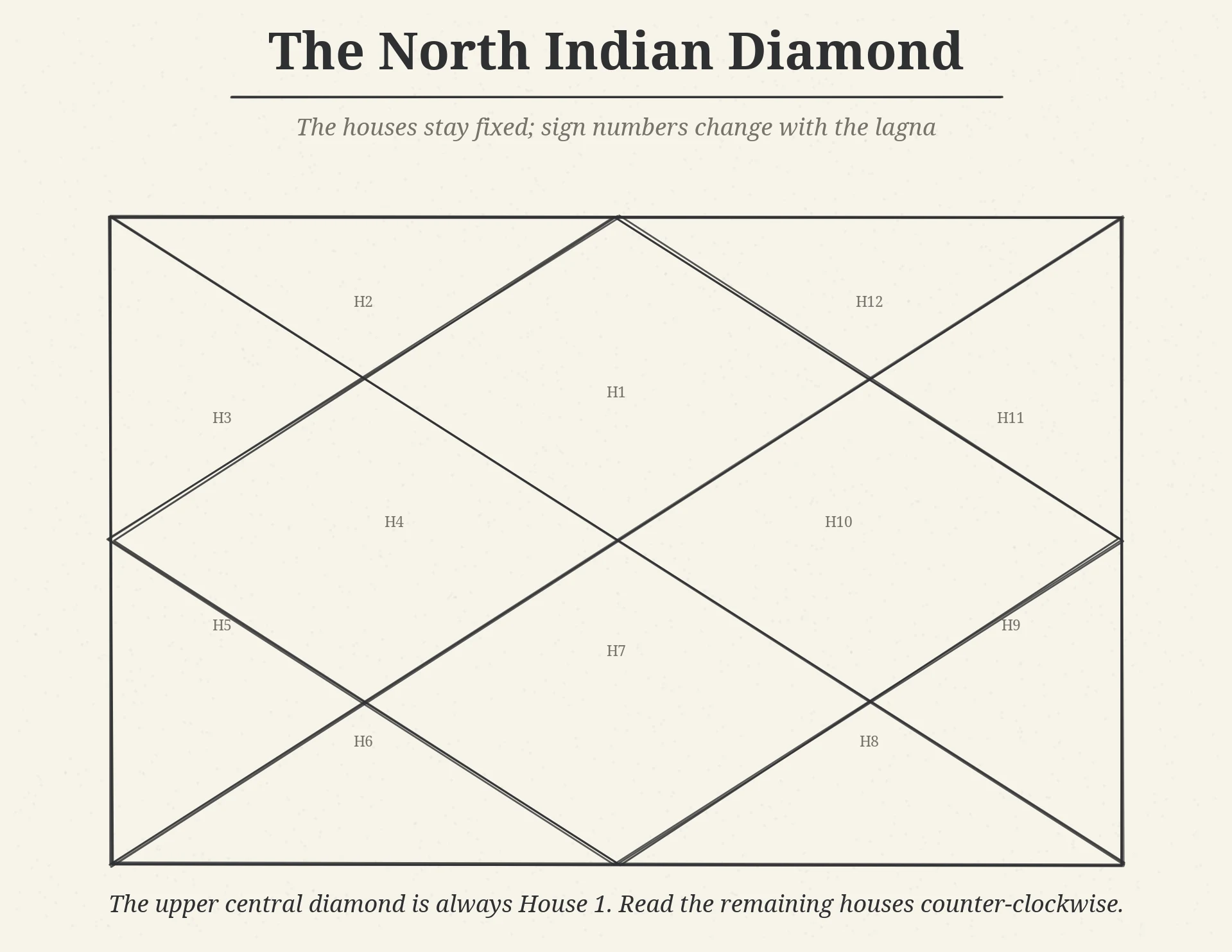
Figure 1. The fixed-house skeleton of the North Indian diamond.
1. The first house is always at the top
In the North Indian chart, House 1 occupies the upper central diamond. That location is fixed regardless of the lagna sign. The other houses follow counter-clockwise:
- House 2: upper-left triangle
- House 3: left-upper triangle
- House 4: left central diamond
- Houses 5 and 6: lower-left triangles
- House 7: lower central diamond
- Houses 8 and 9: lower-right triangles
- House 10: right central diamond
- Houses 11 and 12: upper-right triangles
The four central diamonds are the kendras (an angular house: 1, 4, 7 or 10): Houses 1, 4, 7 and 10. Their fixed geometry is one reason North Indian readers often begin with house structure before scanning sign dignity.
2. The numerals identify signs
The number in a house does not name the house. It identifies the Rāśi (one of the twelve zodiac signs) occupying that house:
| Number | Rāśi | Number | Rāśi |
|---|
| 1 | Aries / Meṣa | 7 | Libra / Tulā |
| 2 | Taurus / Vṛṣabha | 8 | Scorpio / Vṛścika |
| 3 | Gemini / Mithuna | 9 | Sagittarius / Dhanuṣ |
| 4 | Cancer / Karkaṭa | 10 | Capricorn / Makara |
| 5 | Leo / Siṃha | 11 | Aquarius / Kumbha |
| 6 | Virgo / Kanyā | 12 | Pisces / Mīna |
In Ananya’s chart the top diamond contains the numeral 4. That means Cancer, the fourth sign, is rising. It does not mean that the top diamond is House 4. It remains House 1.
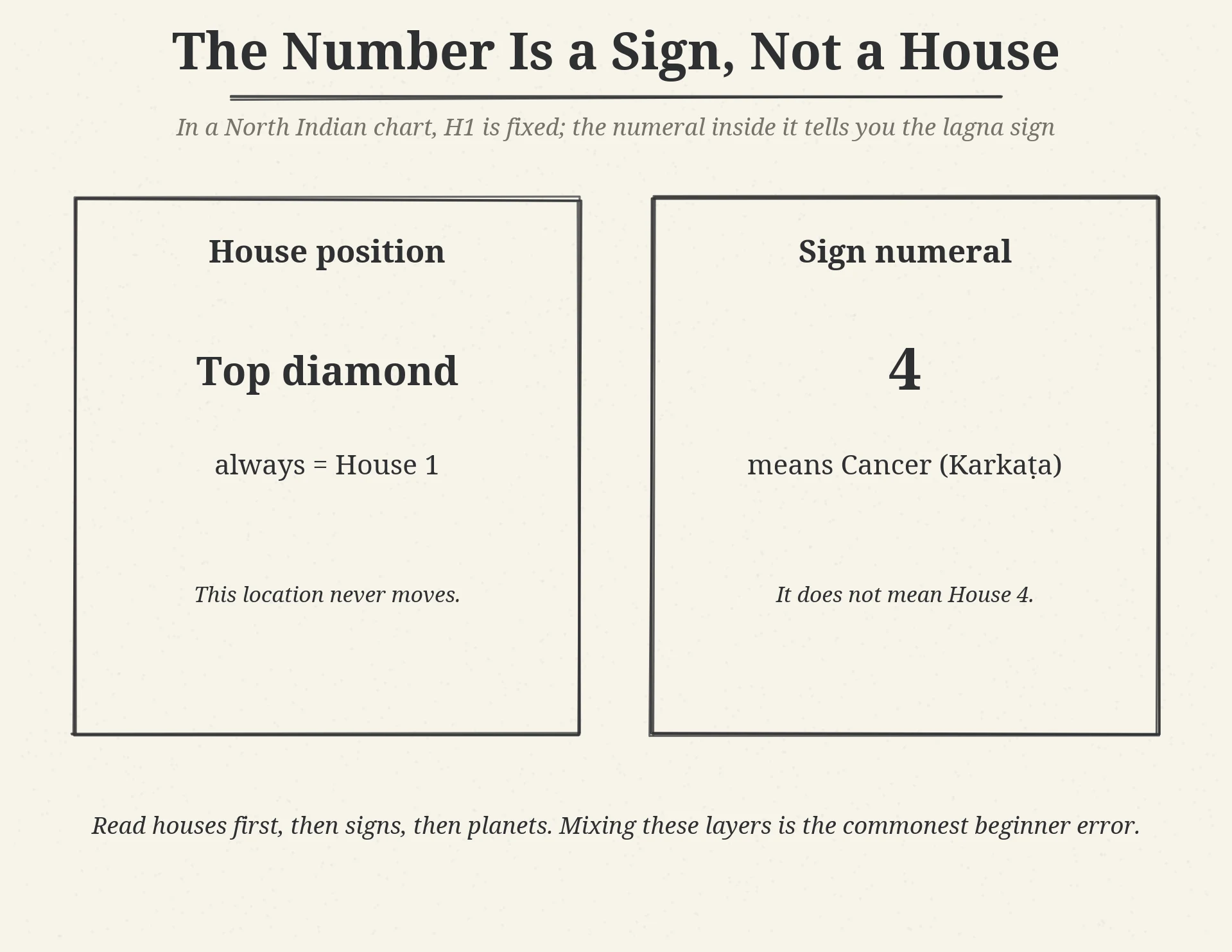
Figure 2. In a North Indian kundli, the location names the house and the numeral names the sign.
3. A house-first reading method
The cleanest beginner sequence is:
- identify the fixed house location;
- read the sign numeral inside it;
- convert the numeral to a rāśi;
- note the grahas written there;
- add lordship and condition.
Take the lower central diamond. Its location is always House 7. In the teaching chart it contains sign number 10, Capricorn, and the abbreviations Ma, Ve and Ra. The factual statement is:
House 7 is Capricorn and contains Mars, Venus and Rāhu.
The ruler of Capricorn is Saturn, which appears in House 6 in sign number 9, Sagittarius. Mars is exalted in Capricorn and owns Houses 5 and 10 for a Cancer lagna. Venus owns Houses 4 and 11. Rāhu’s interpretation depends on the adopted lineage and its associations.
This is already a network. A one-line claim such as “Mars in the seventh causes X” discards most of the chart.
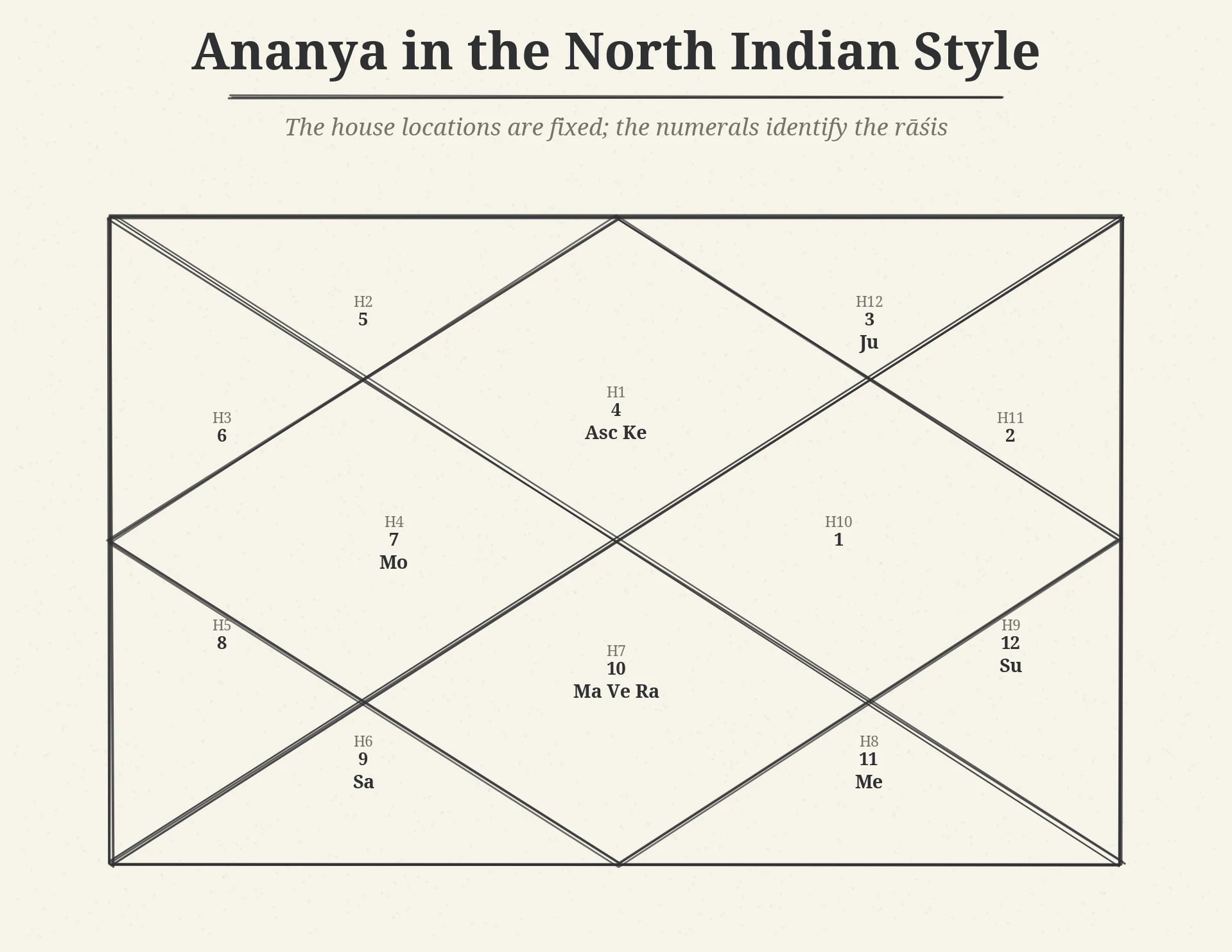
Figure 3. The synthetic teaching chart in the North Indian format.
4. Why the diamond makes some relationships easy to see
The fixed houses reveal recurring structural groups.
Kendras
Houses 1, 4, 7 and 10 form the central cross. They describe the axes of self, home, relationship and public action.
Trikoṇas
The trikoṇas—Houses 1, 5 and 9—are commonly treated as trinal houses (a trinal house, especially 1, 5 or 9). The first participates in both the angular and trinal structures.
Duḥsthānas
Houses 6, 8 and 12 are often grouped as duḥsthānas (a difficult house, commonly 6, 8 or 12). This label indicates difficulty, complexity, vulnerability or withdrawal; it does not make every possible expression uniformly negative. Service, research, healing, seclusion and foreign residence can involve these houses depending on the wider chart.
Upacayas
The upacayas—Houses 3, 6, 10 and 11—are often described as houses of growth, effort or development. Results may improve through sustained action and time.
These groups are conventions of interpretation, not coloured zones physically present in the sky. The North Indian design simply makes them visually memorable.
5. House lordship still depends on the sign
Fixed houses do not mean fixed lords. The sign numeral in a house determines its ruler.
For Cancer lagna:
- House 1 contains Cancer and is ruled by Moon.
- House 4 contains Libra and is ruled by Venus.
- House 7 contains Capricorn and is ruled by Saturn.
- House 10 contains Aries and is ruled by Mars.
For a Leo lagna, those same fixed house locations would contain different signs and therefore different lords. The geometry is constant; the zodiacal content changes.
A useful working sentence is:
House question → sign in the house → lord of that sign → condition of the lord → occupants and aspects → timing.
6. Empty houses in a fixed-house chart
The North Indian layout can tempt the eye to focus only on cells containing abbreviations. Resist that habit. House 10 in Ananya’s chart is empty, but it contains Aries and is ruled by Mars. Mars is strongly placed elsewhere. The house’s agenda is therefore not absent; it is mediated through its lord and the rest of the network.
An empty seventh house is not a declaration of “no marriage.” An occupied eighth house is not, by itself, a catastrophe. Such statements substitute an icon for an argument.
7. The distinction between rāśi and bhāva-cālita
Some North Indian software displays both a rāśi chart and a Bhāva-cālita (a display based on separately calculated house cusps). In the main rāśi chart, a planet’s sign is established by its zodiacal longitude. In a separately calculated bhāva chart, a planet near a house boundary may be assigned to a neighbouring bhāva according to the chosen cusp system.
Two rules prevent confusion:
- A bhāva shift does not change the planet’s rāśi.
- Sign dignity and sign lordship remain based on the actual zodiacal sign.
A software screen that moves a planet from House 7 to House 6 has not moved it from Capricorn to Sagittarius. It has changed the house assignment under a specified method. The method and settings should be visible.
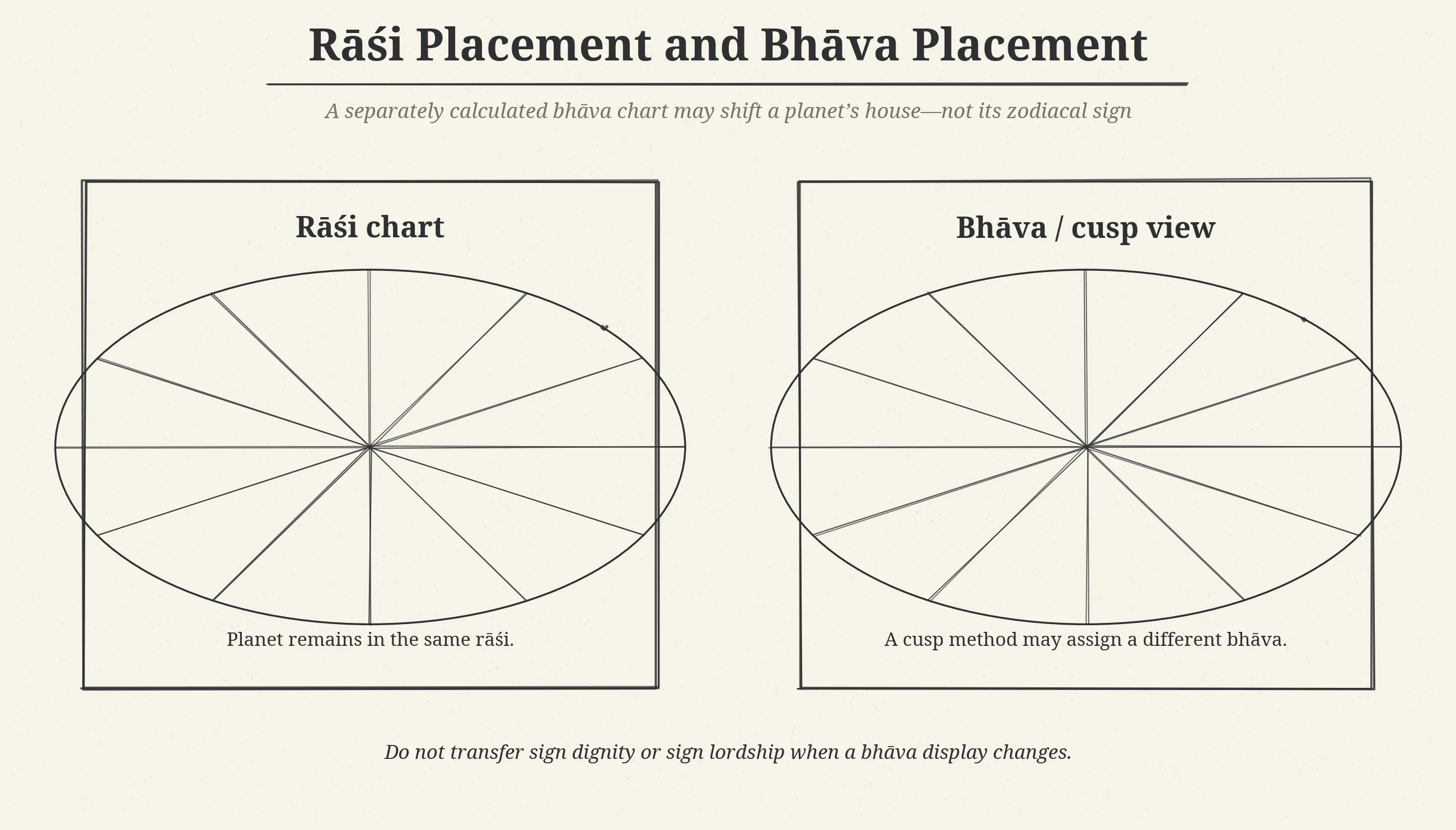
Figure 4. Rāśi location and separately calculated bhāva assignment answer different questions.
8. A worked question: where would we begin with career?
A primer should model method rather than promise an occupation.
For a career question, begin with House 10. In Ananya’s North Indian chart:
- House 10 is the right central diamond.
- The numeral 1 identifies Aries.
- Aries is ruled by Mars.
- Mars occupies House 7 in Capricorn.
- Mars also rules House 5 and is exalted by sign.
- Venus and Rāhu share the seventh house.
- Saturn, ruler of the seventh sign Capricorn, occupies House 6.
- The Navāṃśa (the ninth divisional chart, D9) and the operating Daśā (a rule-governed planetary period) would be examined before a timed conclusion.
This supports several lines of inquiry: visible work with clients or partners, initiative, technical or managerial capacity, competition, counsel, contractual environments, and the way professional choices interact with relationship and public-facing settings. It does not justify selecting one profession from a drop-down list.
A human biography is more specific than the symbolic categories of a chart. Education, family resources, geography and deliberate training decide which plausible expression becomes real.
9. Navāṃśa in the North Indian format
A North Indian D9 uses the same fixed-house geometry but with a new lagna and redistributed signs. The D9 ascendant in the teaching chart is Leo. The top diamond therefore contains sign number 5. Planetary placements are derived from their exact ninth divisions, not copied from the rāśi chart.
The navāṃśa is commonly used to refine:
- the strength and maturity of grahas;
- whether a rāśi-level condition is reinforced;
- partnership and relational capacity in many lineages;
- dharmic orientation and the deeper delivery of chart promises.
It should not be used to invent an interpretation that has no foundation in the main chart.
10. Daśā: when a house-lord network becomes prominent
The Vimśottarī (a 120-year nakṣatra-based daśā system) sequence begins from the Moon’s Nakṣatra (a lunar mansion or stellar sector). In the teaching chart the Moon is in Svātī, so Rāhu mahādaśā is operating at birth, with about 7.38 years remaining. Later periods foreground Jupiter, Saturn, Mercury and the rest of the sequence.
When a daśā lord operates, the practitioner examines its sign, house, lordship, associations, aspects and divisional condition. The period is not read from the planet’s natural symbolism alone.
This makes the fixed-house chart especially useful: the reader can follow the active planet’s house ownership and placement through the stable diamond.
11. Converting from a South Indian chart
Do not redraw by eye. Make a neutral ledger:
| House | Sign | Planets |
|---|
| 1 | Cancer | Ascendant, Ketu |
| 4 | Libra | Moon |
| 6 | Sagittarius | Saturn |
| 7 | Capricorn | Mars, Venus, Rāhu |
| 8 | Aquarius | Mercury |
| 9 | Pisces | Sun |
| 12 | Gemini | Jupiter |
Then place each row into the fixed North Indian house location. This procedure preserves data and prevents clockwise/counter-clockwise mistakes.
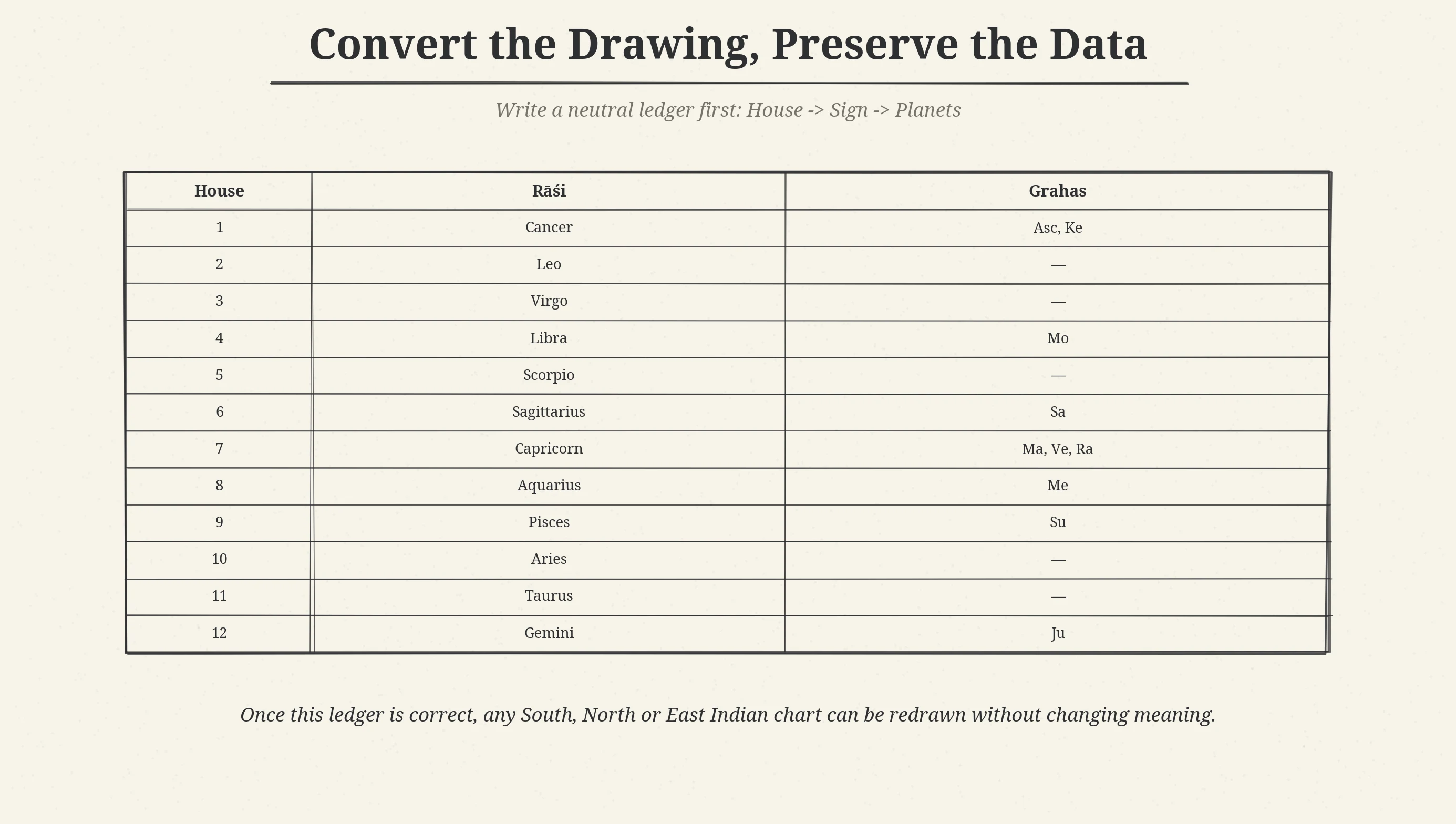
Figure 5. A neutral house-sign-planet ledger allows safe conversion between styles.
12. A five-minute North Indian reading
- Locate the top central House 1.
- Convert its numeral to the lagna sign.
- Follow the houses counter-clockwise.
- In the relevant house, identify the sign numeral and occupants.
- Find the sign lord and its location.
- Add strength, dignity, conjunctions and dṛṣṭi.
- Use relevant vargas and daśā.
- State uncertainty when the birth time or calculation setting is uncertain.
- Return to the person’s actual life and question.
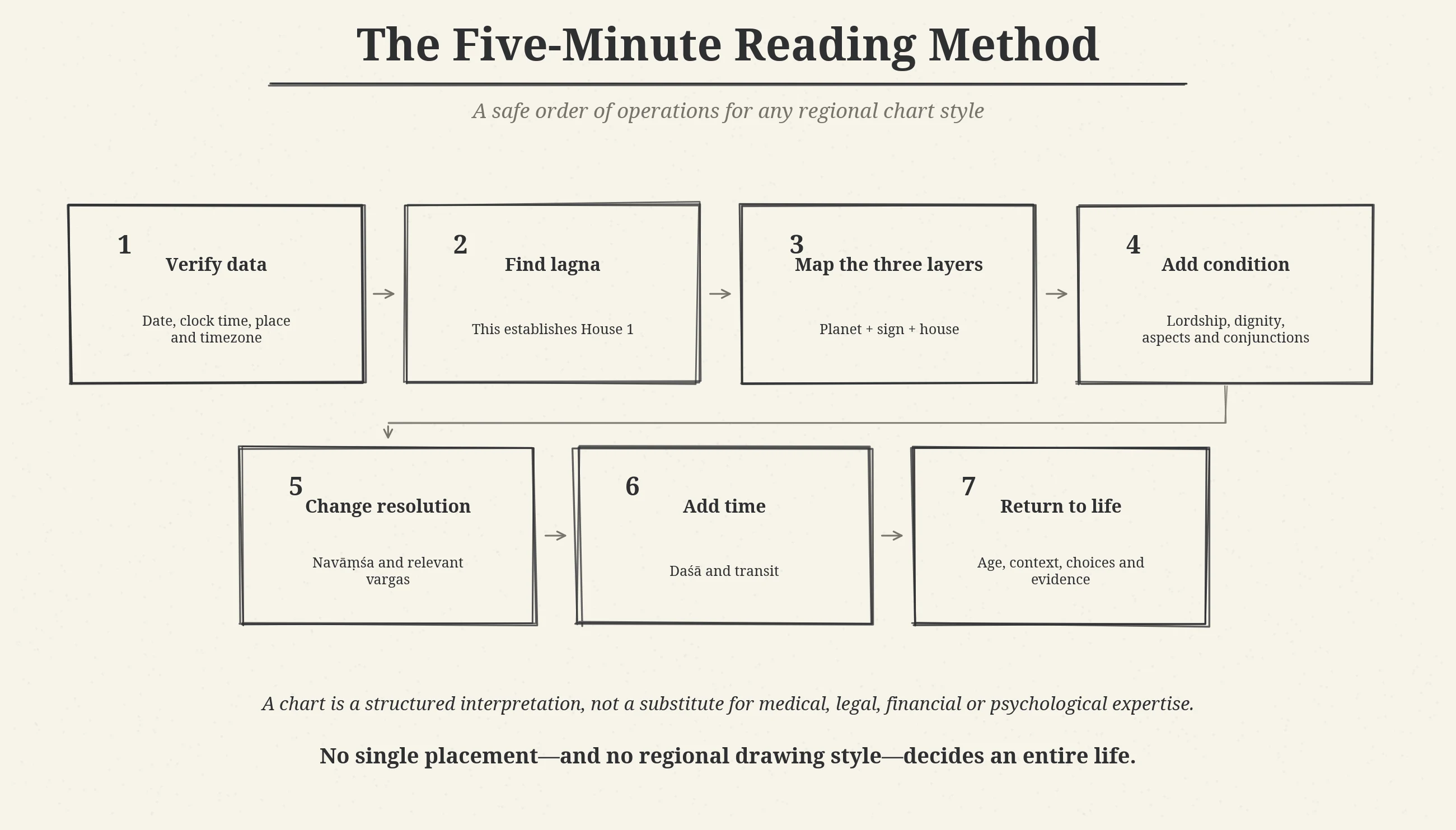
Figure 6. The same disciplined reading order works across all three chart styles.
13. Common mistakes
Reading the numeral as the house number
The house is determined by location. The numeral is the sign.
Assuming the top diamond is Aries
It is always House 1, but its sign changes with the lagna.
Forgetting sign dignity because the chart looks house-centred
A planet’s sign remains essential for ownership and condition.
Treating a bhāva-cālita shift as a sign change
House assignment may change; zodiacal longitude does not.
Calling an empty house inactive
Its ruler, aspects, vargas and timing remain active parts of judgment.
Reading a famous yoga without checking every condition
A Yoga (a specified combination of chart factors) is a rule-governed relationship, not a keyword triggered by any vaguely similar placement.
Practice exercise
Using the blank North Indian diamond:
- Write 4 in House 1 to mark Cancer lagna.
- Continue the sign numbers counter-clockwise through the fixed houses.
- Place Moon in House 4, Saturn in House 6, Mars–Venus–Rāhu in House 7, Mercury in House 8, Sun in House 9, Jupiter in House 12 and Ketu in House 1.
- Circle the kendras.
- Write the lords of Houses 1, 7 and 10.
- Explain why the numeral 10 inside House 7 means Capricorn, not “the tenth house.”
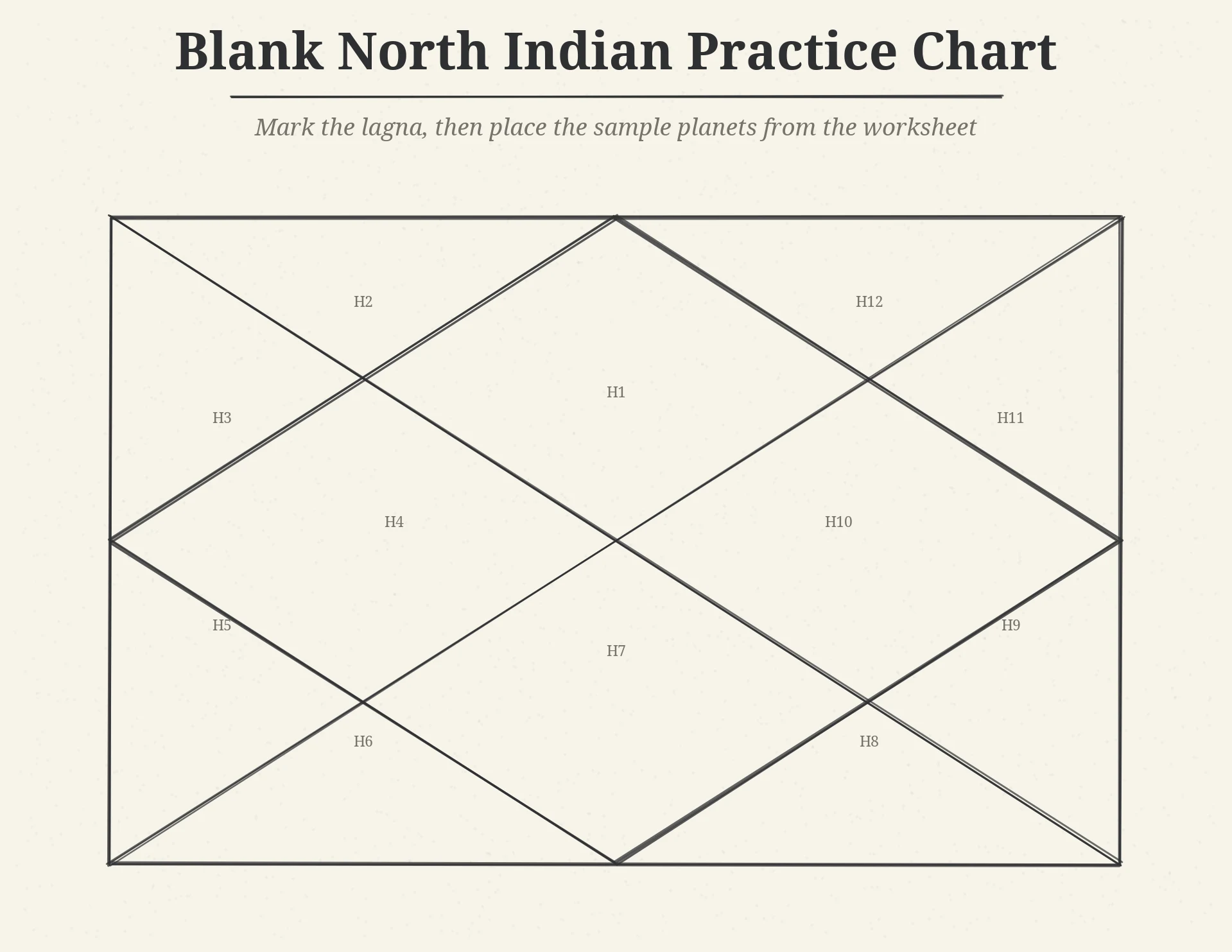
Practice sheet. A blank North Indian fixed-house chart.
Closing thought
The North Indian chart is efficient because it fixes the questions—houses—in stable locations. Its danger is equally clear: a reader may forget that each house is coloured by a moving sign and its lord. Read the location, translate the numeral, then judge the graha. The diamond is a grammar, not a verdict.
Notes and sources
[1] Varāhamihira. Bṛhat Jātaka. English translation and notes by V. Subrahmanya Sastri, especially Chapters I–II on signs, divisions and planets, and Chapters X and XX on livelihood and planets in houses. Internet Archive edition.
[2] Mantreśvara. Phaladīpikā. English translation by V. Subrahmanya Sastri, especially the opening chapters on signs, planets, vargas and bhāvas. Internet Archive edition.
[3] Kalyāṇavarma. Sārāvalī. English translation available through the Internet Archive.
[4] K. S. Charak. Elements of Vedic Astrology, Volumes I–II. A modern instructional work on chart construction, houses, planets, vargas, yogas and daśās.
[5] P. V. R. Narasimha Rao. Vedic Astrology: An Integrated Approach. Free author-distributed textbook, VedicAstrologer.org.
[6] P. V. R. Narasimha Rao. “Features of Jagannatha Hora Software.” The official documentation confirms South Indian, North Indian and East Indian display styles and a mixed mode that shows the same chart in two styles.
[7] Astrodienst. Swiss Ephemeris Documentation, Version 2.10 series, for sidereal positions, ascendant and house calculations.
Methodological note
The articles explain the internal grammar of a living interpretive tradition. They do not claim that a chart can replace medical, legal, financial or psychological expertise. The example is synthetic, and no life prediction is being made about an actual person.