How to Read a South Indian Jātakam
Fixed signs, moving houses, and a reliable beginner method
By Vamsikrishna Sankarayogi ·
A South Indian birth chart often looks forbidding for about thirty seconds. Then one rule makes it fall into place: the zodiac signs never move. Pisces is always in the upper-left corner; Aries follows it across the top; the remaining signs continue clockwise around the outer frame. What changes from one birth to another is the location of the Lagna (the ascendant or rising zodiacal point). The sign containing that mark becomes the first house (a house or field of life), and the rest of the houses are counted clockwise.
This article teaches that visual grammar carefully. It does not attempt to compress a complete discipline into a list of one-line predictions. By the end, a reader should be able to identify the lagna, count the houses, state a planetary placement correctly, find a house lord, understand why empty houses still matter, and recognise the supporting roles of the Navāṃśa (the ninth divisional chart, D9) and Daśā (a rule-governed planetary period).
Teaching chart used throughout the series Name: Ananya — a fictional teaching chart, not a real client Birth data: 15 March 1990, 2:30 PM IST; Bengaluru, India Calculation: Swiss Ephemeris 2.10.03; Lahiri (Chitrapaksha) ayanāṃśa (the offset used to define a sidereal zodiac); true node; whole-sign houses Ascendant: Cancer 04°25′41″ Moon: Libra 14°32′04″, Svātī pāda 3 Birth-period balance: approximately 7.38 years of Rahu mahādaśā remained at birth.
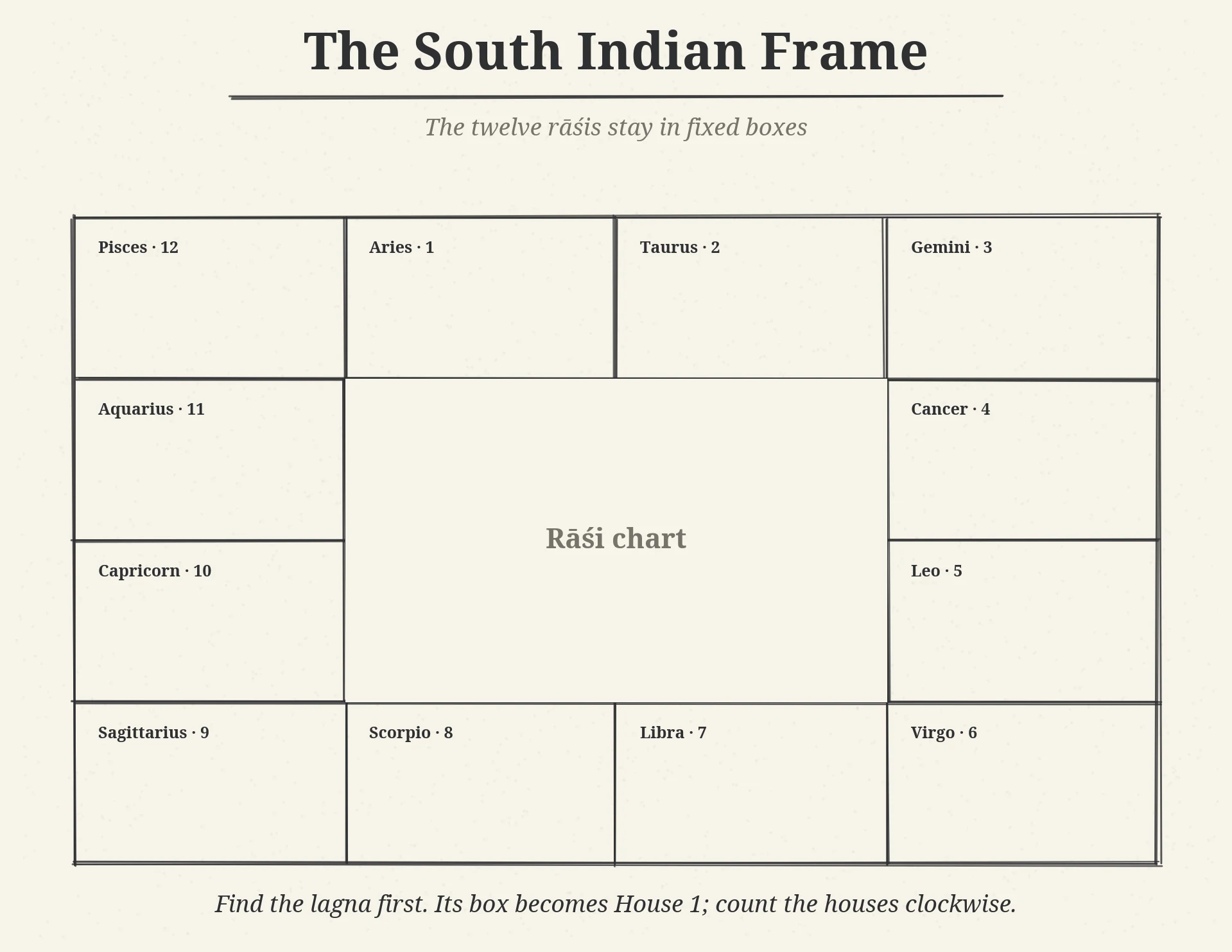
Figure 1. The fixed-sign frame used in the South Indian chart.
1. What the chart actually records
A jātakam (a South Indian term for a birth horoscope) is a diagrammatic way of arranging astronomical positions at a stated time and place. It shows where the Sun, Moon, planets and lunar nodes fall in the twelve rāśis (one of the twelve zodiac signs), and it organises those positions in relation to the rising point. The diagram is therefore produced through calculation before it becomes an object of interpretation.
Because these positions are sidereal, the selected ayanāṃśa is part of the reproducible calculation record rather than an optional visual detail.
Four words must be kept distinct from the start:
- A rāśi is a thirty-degree zodiac sign.
- A bhāva is a field of life conventionally translated as a house.
- A graha is a planetary factor used in Jyotiṣa.
- The lagna is the zodiacal point rising on the eastern horizon.
Beginners frequently collapse these categories. They see Mars in a box and say “Mars is in the seventh” without first checking which sign the box represents and whether that sign is seventh from the lagna. A technically complete first sentence has three pieces: planet, sign and house.
In the teaching method used here, the whole sign containing the ascendant is treated as House 1. Some practitioners also calculate intermediate house cusps and produce a separate Bhāva-cālita (a display based on separately calculated house cusps) display. That refinement is legitimate within its own conventions, but it should be added later. The first task is to read the main rāśi chart without mixing systems.
2. Memorise the frame once
The South Indian arrangement is a fixed map. Reading clockwise from Aries, the signs occupy these permanent locations:
| Fixed position | Rāśi |
|---|
| Top row, second box | Aries / Meṣa |
| Top row, third box | Taurus / Vṛṣabha |
| Top-right box | Gemini / Mithuna |
| Upper-right side | Cancer / Karkaṭa |
| Lower-right side | Leo / Siṃha |
| Bottom-right box | Virgo / Kanyā |
| Bottom row, third box | Libra / Tulā |
| Bottom row, second box | Scorpio / Vṛścika |
| Bottom-left box | Sagittarius / Dhanuṣ |
| Lower-left side | Capricorn / Makara |
| Upper-left side | Aquarius / Kumbha |
| Top-left box | Pisces / Mīna |
There is no need to memorise a new sign map for each person. This is why experienced South Indian readers often notice sign dignity quickly: Mars in Capricorn, Jupiter in Sagittarius or Venus in Taurus is visible in a familiar location before the houses are counted.
The centre is usually left blank or used for a title. It is not an additional house.
3. Find the lagna before reading anything else
The sign containing “Asc,” “L,” “Lagna,” a diagonal mark or another ascendant symbol becomes House 1. In Ananya’s teaching chart, the lagna is at Cancer 4°25′. Cancer is therefore the first house. Count clockwise:
- Cancer
- Leo
- Virgo
- Libra
- Scorpio
- Sagittarius
- Capricorn
- Aquarius
- Pisces
- Aries
- Taurus
- Gemini
The signs stay in their familiar boxes; the house numbers are assigned from the lagna. If the same fixed-sign frame carried a Libra lagna, Libra would become House 1 and the house sequence would begin there instead.
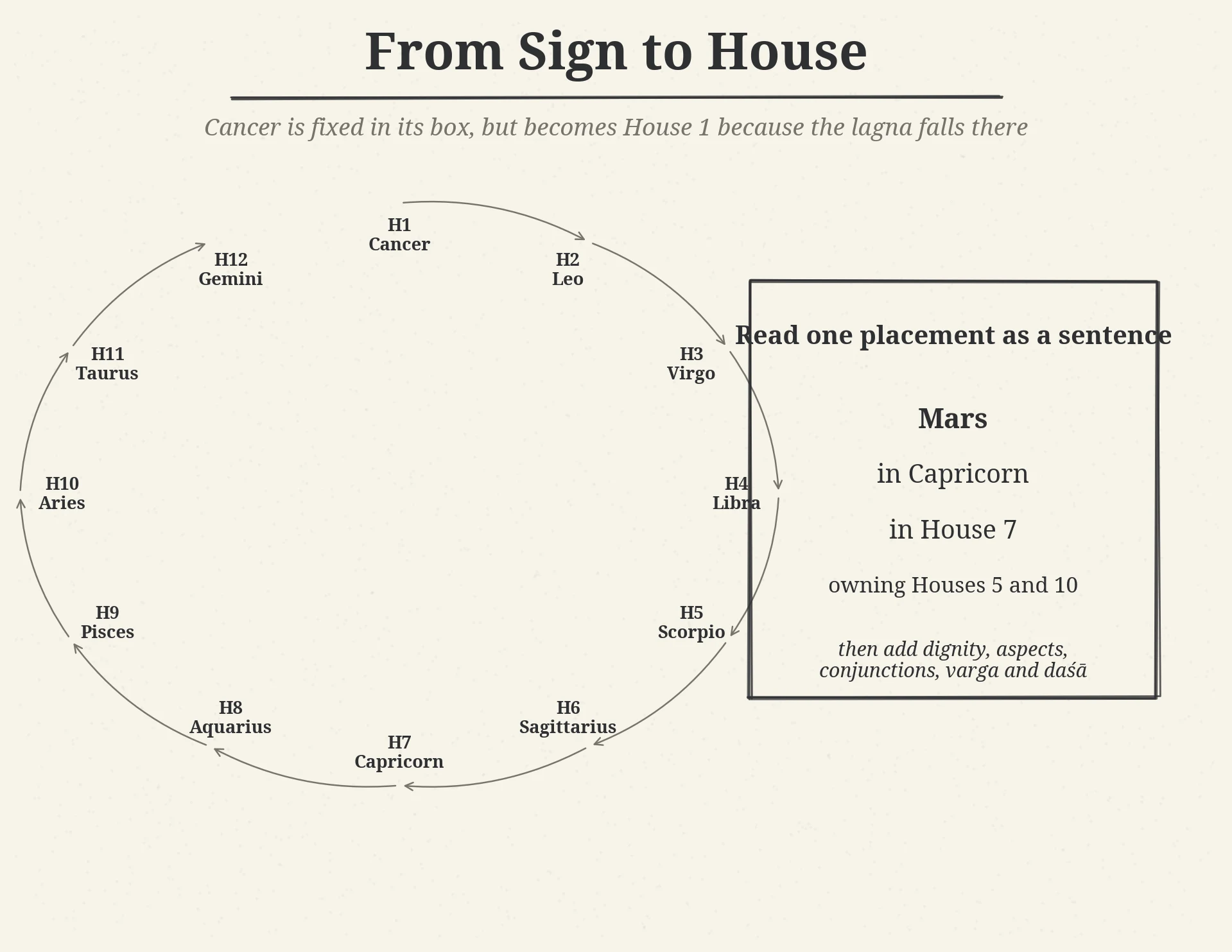
Figure 2. House counting begins at the lagna and proceeds clockwise.
4. Read every placement as a grammatical sentence
Consider Mars in the sample chart. Mars appears in the fixed Capricorn box. Since Capricorn is seventh from Cancer, the first statement is:
Mars is in Capricorn in the seventh house.
Now add Lordship (the houses governed by a planet through sign ownership). For Cancer lagna, Mars rules Scorpio and Aries. Those signs occupy Houses 5 and 10. The fuller statement becomes:
Mars, lord of Houses 5 and 10, is in Capricorn in House 7.
Only then add condition. Mars is exalted in Capricorn, but it is not alone: Venus and Rāhu share the sign. Saturn, the ruler of Capricorn and of the seventh house, is in Sagittarius in House 6. A responsible reading must therefore consider strength, conjunction, house ownership, the condition of the dispositor and relevant aspects (an aspect or formal line of influence).
The educational point is more important than any prediction: an exaltation label does not finish the judgment. It begins a line of inquiry.
The same method works with the Moon:
The Moon, ruler of Cancer and therefore lord of House 1, is in Libra in House 4.
With Jupiter:
Jupiter, lord of Houses 6 and 9, is in Gemini in House 12.
The sentences are factual descriptions of the chart. Interpretation comes after the chart has been stated accurately.
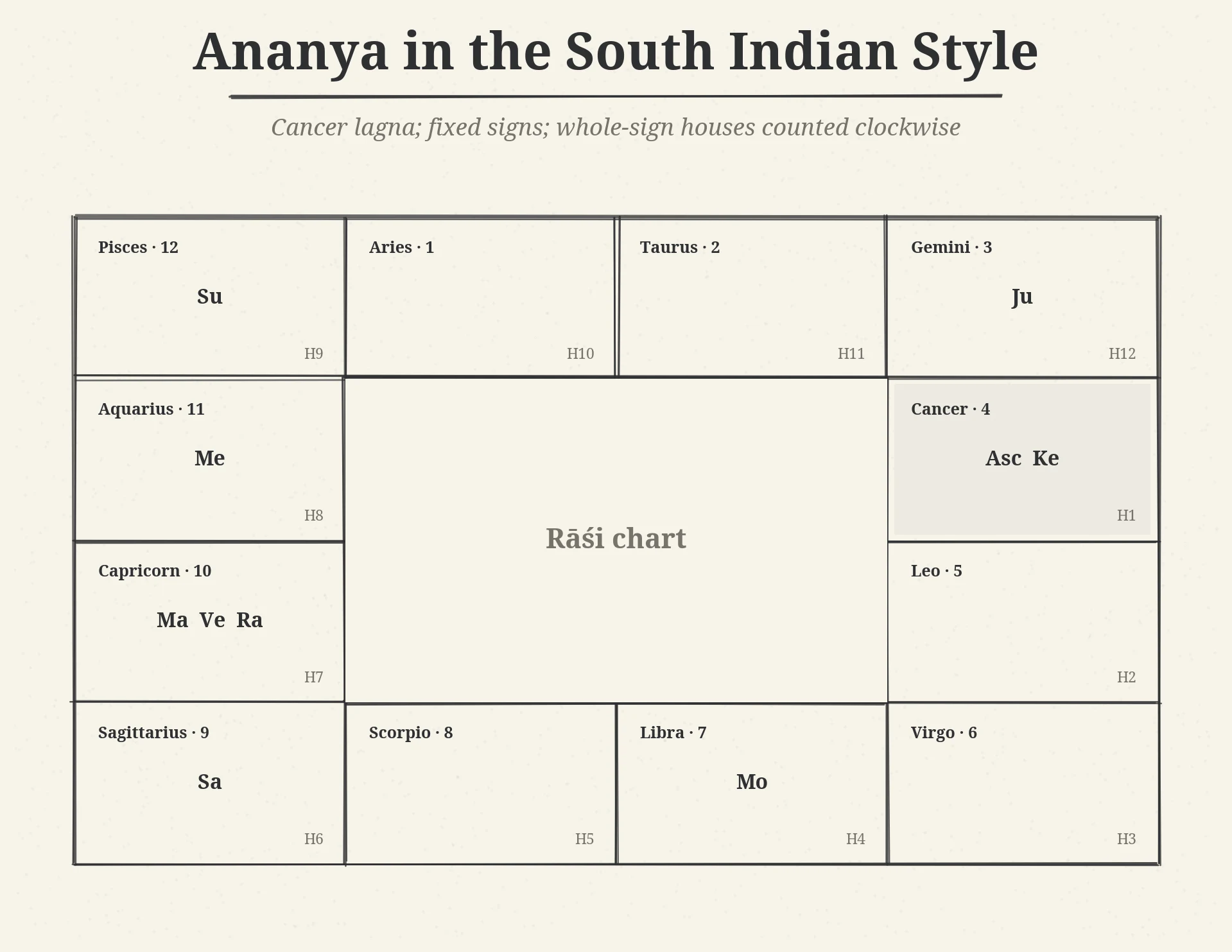
Figure 3. The synthetic teaching chart in the South Indian format.
5. Empty houses are not missing parts of life
In Ananya’s chart, Houses 2, 3, 5, 10 and 11 contain no grahas. That does not mean family, effort, creativity, work or gains are absent. An empty house is judged through several other factors:
- the sign occupying the house;
- the planet ruling that sign;
- the condition and location of that lord;
- grahas aspecting the house or its lord;
- relevant vargas;
- the operating daśā and transit context.
House 10, for example, is Aries and therefore ruled by Mars. Mars is not physically inside House 10, but its condition remains central to professional questions because it owns that house. The South Indian layout makes this lordship exercise easy once the fixed sign map is known.
6. The twelve houses in ordinary language
A primer needs concise meanings without pretending that each house has only one subject.
| House | Practical field |
|---|
| 1 | body, orientation, temperament and the manner of entering life |
| 2 | resources, speech, food, family continuity and accumulated value |
| 3 | effort, skills, communication, siblings and self-initiated action |
| 4 | home, emotional foundation, education, property and private life |
| 5 | learning, creativity, children, counsel and the use of intelligence |
| 6 | illness, debt, conflict, service, competition and obligations |
| 7 | partnership, agreements, public dealing and the person opposite us |
| 8 | vulnerability, inheritance, hidden matters, discontinuity and transformation |
| 9 | teachers, principles, higher study, pilgrimage and long journeys |
| 10 | work, responsibility, status, conduct and visible contribution |
| 11 | gains, networks, ambitions, elder siblings and fulfilment of objectives |
| 12 | expenditure, sleep, retreat, foreign residence, loss and release |
These are fields, not verdicts. The sixth is not “the bad house,” and the twelfth is not simply “loss.” Hospital care, disciplined service, research, retreat, philanthropy and foreign residence may all involve houses that popular summaries treat too narrowly.
7. How to find house lords
The ruler of the sign occupying a house becomes the lord of that house. The seven classical planetary rulers are:
| Rāśi | Lord |
|---|
| Aries and Scorpio | Mars |
| Taurus and Libra | Venus |
| Gemini and Virgo | Mercury |
| Cancer | Moon |
| Leo | Sun |
| Sagittarius and Pisces | Jupiter |
| Capricorn and Aquarius | Saturn |
For Cancer lagna, the complete lordship map is:
- Moon: House 1
- Sun: House 2
- Mercury: Houses 3 and 12
- Venus: Houses 4 and 11
- Mars: Houses 5 and 10
- Jupiter: Houses 6 and 9
- Saturn: Houses 7 and 8
This is why generic phrases such as “Jupiter is always beneficial” are inadequate. A graha carries its natural significations, but it also acts through the houses it owns in a particular chart. The chart must be read locally, from its actual lagna.
8. Condition: useful labels, dangerous shortcuts
A beginner should recognise the main modifying ideas while resisting one-factor judgments.
- Own sign: the graha occupies a rāśi it rules.
- Exaltation: a traditionally designated sign of heightened expression.
- Debilitation: a traditionally designated sign of reduced or complicated expression.
- Conjunction: two or more grahas share a rāśi or a defined proximity.
- Aspect: a formal relationship under a specified dṛṣṭi rule.
- Combustion: a planet is sufficiently close to the Sun under the adopted rule.
- Retrogression: apparent reversal against the stellar background.
- Dispositor: the ruler of the sign occupied by a planet.
Each label changes the question; none supplies the entire answer. A strong planet may strongly deliver a difficult house agenda. A weak planet may receive support. A conjunction may combine significations or create conflict. Even classical texts repeatedly modify results by sign, house, aspect, strength and divisional position rather than relying on one placement.
9. Why the navāṃśa appears beside the rāśi chart
The Navāṃśa divides each sign into nine portions of 3°20′ and redistributes those portions through the zodiac. It is the most frequently displayed Varga (a divisional chart or change of resolution) after the main rāśi chart.
The navāṃśa should not be read as a second person or an independent biography. It changes resolution. It can refine the condition of a planet, show whether a strength in the rāśi chart is reinforced or complicated, and support specialised judgment according to lineage.
In the teaching chart, Mars is exalted in Capricorn in the rāśi chart but falls in Pisces in the navāṃśa. Venus moves from Capricorn to Taurus, its own sign, in D9. Jupiter moves to Sagittarius, its own sign. These facts do not cancel the rāśi placements; they add a finer layer.
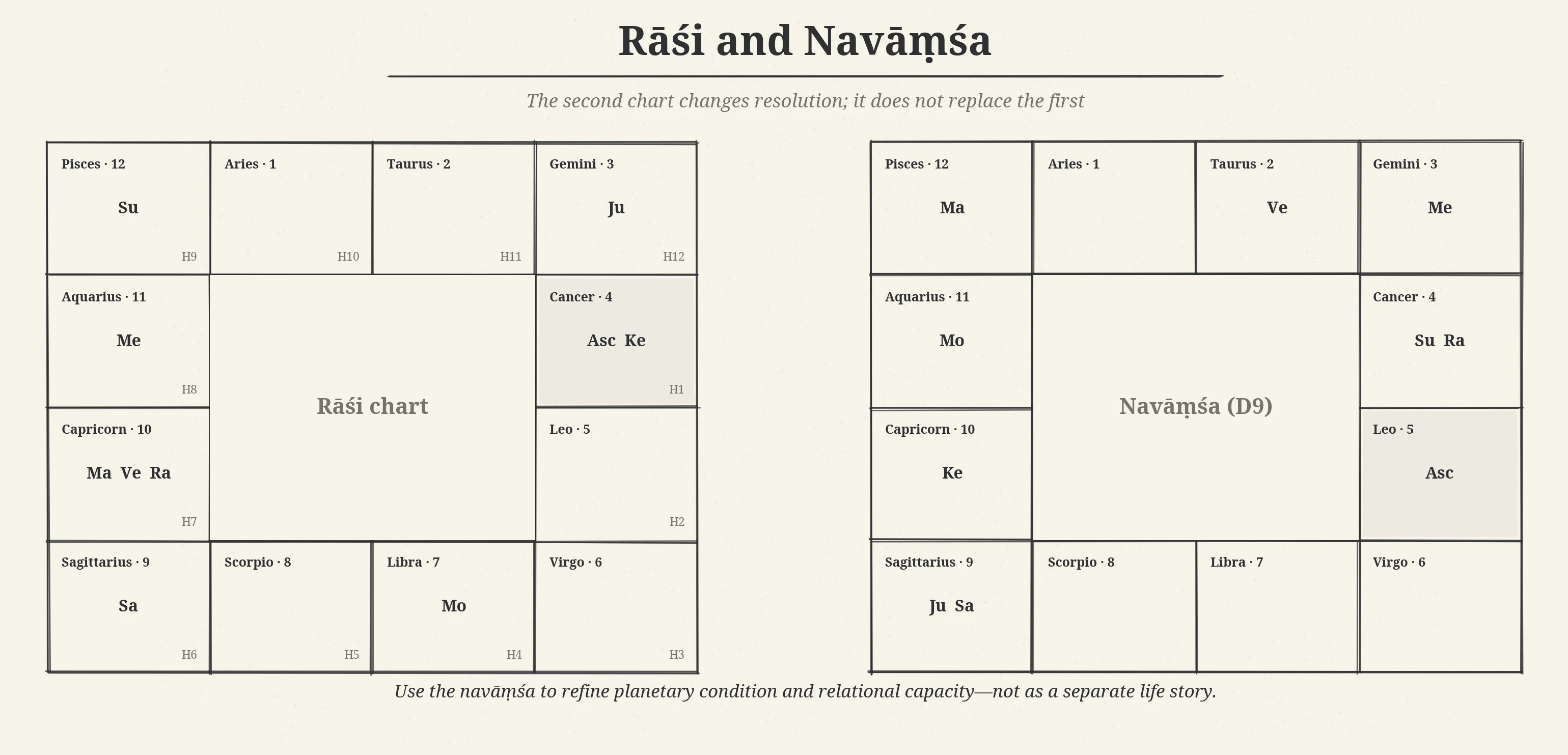
Figure 4. The same planets in the rāśi chart and the navāṃśa.
10. Daśā adds sequence to structure
A birth chart is static: it records one moment. A Daśā is a rule for unfolding that structure through time. In the commonly used Vimśottarī (a 120-year nakṣatra-based daśā system) system, the Moon’s nakṣatra determines the planetary period operating at birth and how much of it remains.
Ananya’s Moon lies in Svātī, ruled by Rāhu. Approximately 7.38 years of Rāhu mahādaśā remained at birth under the calculation convention used here. The subsequent sequence is Jupiter, Saturn, Mercury and so on.
This does not mean that a daśā mechanically causes one event. It tells the practitioner which planetary network is temporally foregrounded. Age, place, choices, health, education and actual opportunity still matter. The daśā should be used to ask a better-timed question, not to erase biography.
11. A five-minute South Indian reading
Use this order every time:
- Verify date, clock time, place and timezone.
- Find the lagna mark.
- Count houses clockwise from that sign.
- State each relevant planet as graha + rāśi + bhāva.
- Find the lords of the houses relevant to the question.
- Add dignity, conjunctions, aspects and dispositors.
- Inspect the relevant varga rather than every varga indiscriminately.
- Add daśā and transit only after the natal structure is clear.
- Return to the person’s actual circumstances.
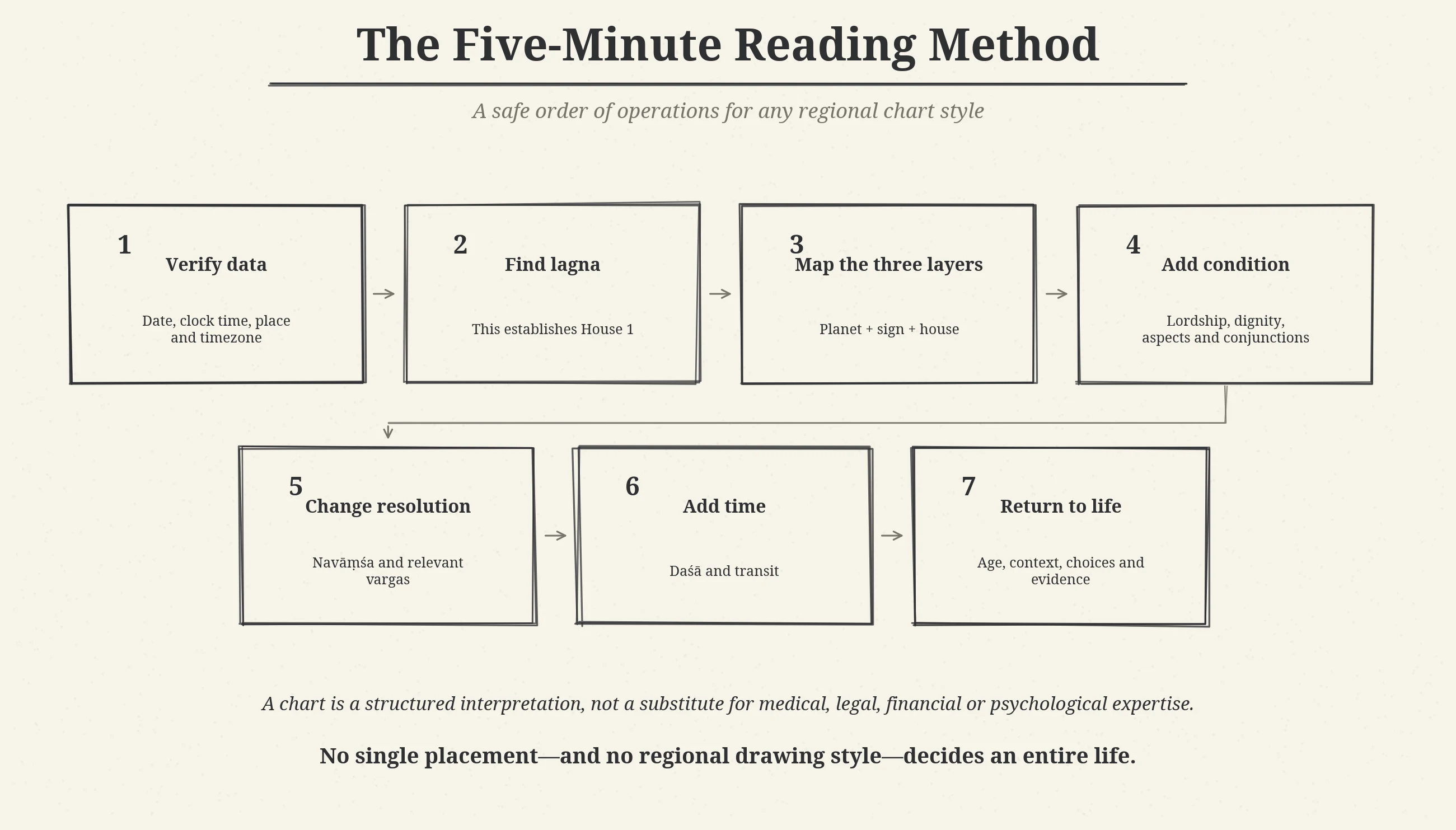
Figure 5. A safe order of operations for reading any kundli format.
12. Common mistakes
Starting from Aries rather than the lagna
Aries is always in its fixed box, but it is House 1 only for an Aries lagna.
Treating a box as a permanent house
The boxes are permanent signs. House numbers move with the lagna.
Reading only occupied houses
Empty houses retain signs, rulers and aspects.
Converting one label into a verdict
“Exalted,” “debilitated,” “retrograde” and “combust” are modifiers, not complete predictions.
Reading the navāṃśa as a replacement chart
The D9 refines and tests the main chart; it does not erase it.
Ignoring birth-time uncertainty
A small change can alter the lagna degree, divisional placements and daśā balance. A chart near a boundary should be presented with that uncertainty visible.
Practice exercise
Using the blank South Indian chart supplied in the package:
- Mark Cancer as the lagna.
- Place Moon in Libra.
- Place Mars, Venus and Rāhu in Capricorn.
- Place Saturn in Sagittarius, Jupiter in Gemini, Mercury in Aquarius, Sun in Pisces and Ketu in Cancer.
- Write one complete sentence for Mars and one for Jupiter.
- Identify the lords of Houses 4, 7 and 10.
A correct answer preserves the distinction among sign, house and planet. The artistic quality of the drawing does not matter.
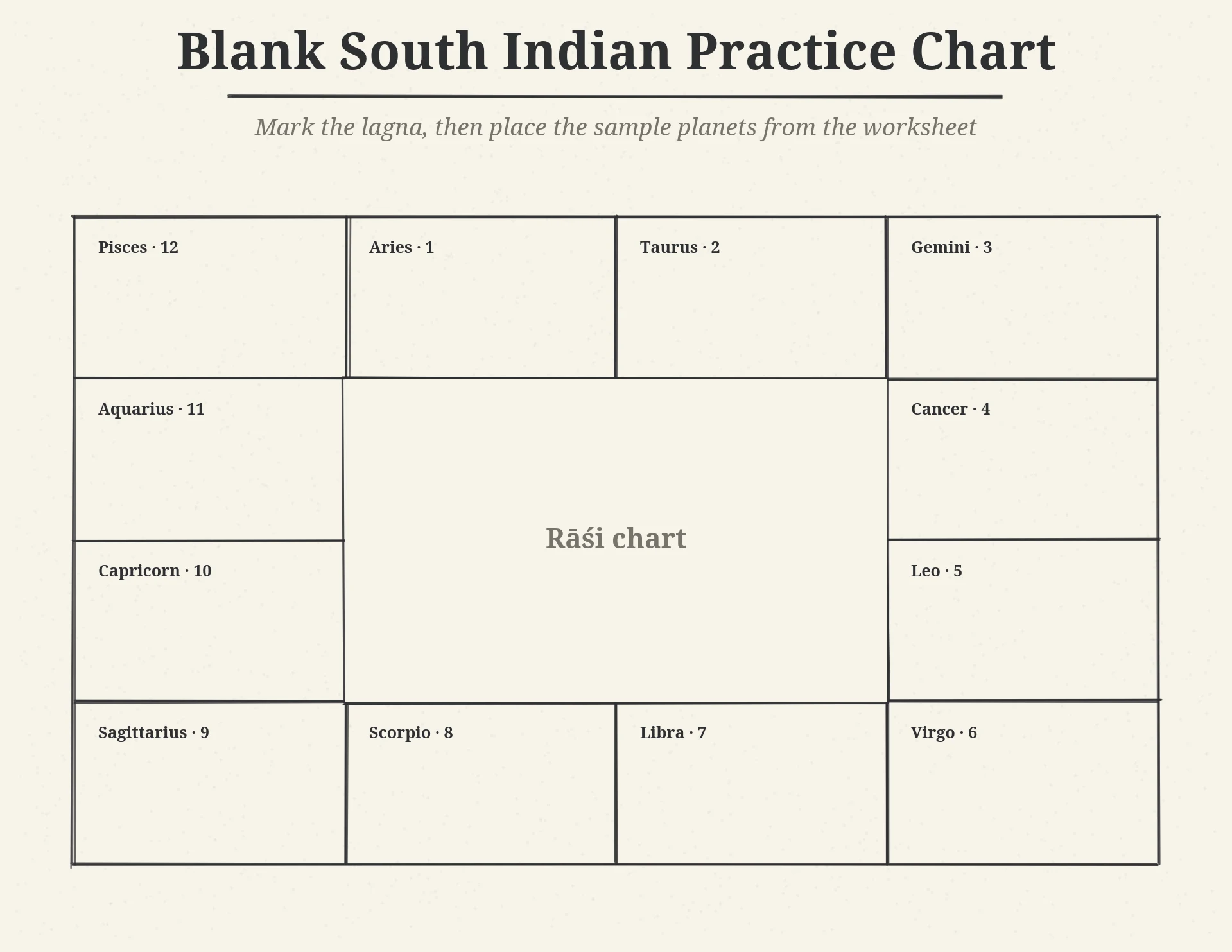
Practice sheet. A blank South Indian fixed-sign chart.
Closing thought
The South Indian chart rewards familiarity. Once the fixed rāśi map is memorised, the eye can move quickly—but speed should not become haste. Find the lagna, count the houses, state the chart accurately and only then interpret. The frame is stable; judgment remains contextual.
Notes and sources
[1] Varāhamihira. Bṛhat Jātaka. English translation and notes by V. Subrahmanya Sastri, especially Chapters I–II on signs, divisions and planets, and Chapters X and XX on livelihood and planets in houses. Internet Archive edition.
[2] Mantreśvara. Phaladīpikā. English translation by V. Subrahmanya Sastri, especially the opening chapters on signs, planets, vargas and bhāvas. Internet Archive edition.
[3] Kalyāṇavarma. Sārāvalī. English translation available through the Internet Archive.
[4] K. S. Charak. Elements of Vedic Astrology, Volumes I–II. A modern instructional work on chart construction, houses, planets, vargas, yogas and daśās.
[5] P. V. R. Narasimha Rao. Vedic Astrology: An Integrated Approach. Free author-distributed textbook, VedicAstrologer.org.
[6] P. V. R. Narasimha Rao. “Features of Jagannatha Hora Software.” The official documentation confirms South Indian, North Indian and East Indian display styles and a mixed mode that shows the same chart in two styles.
[7] Astrodienst. Swiss Ephemeris Documentation, Version 2.10 series, for sidereal positions, ascendant and house calculations.
Methodological note
The articles explain the internal grammar of a living interpretive tradition. They do not claim that a chart can replace medical, legal, financial or psychological expertise. The example is synthetic, and no life prediction is being made about an actual person.